Thought Leadership

Insights on enterprise AI, operating models and governance.

Short, direct notes on what actually moves the needle in enterprise AI — written from inside the operating rhythm, not from a slide deck.

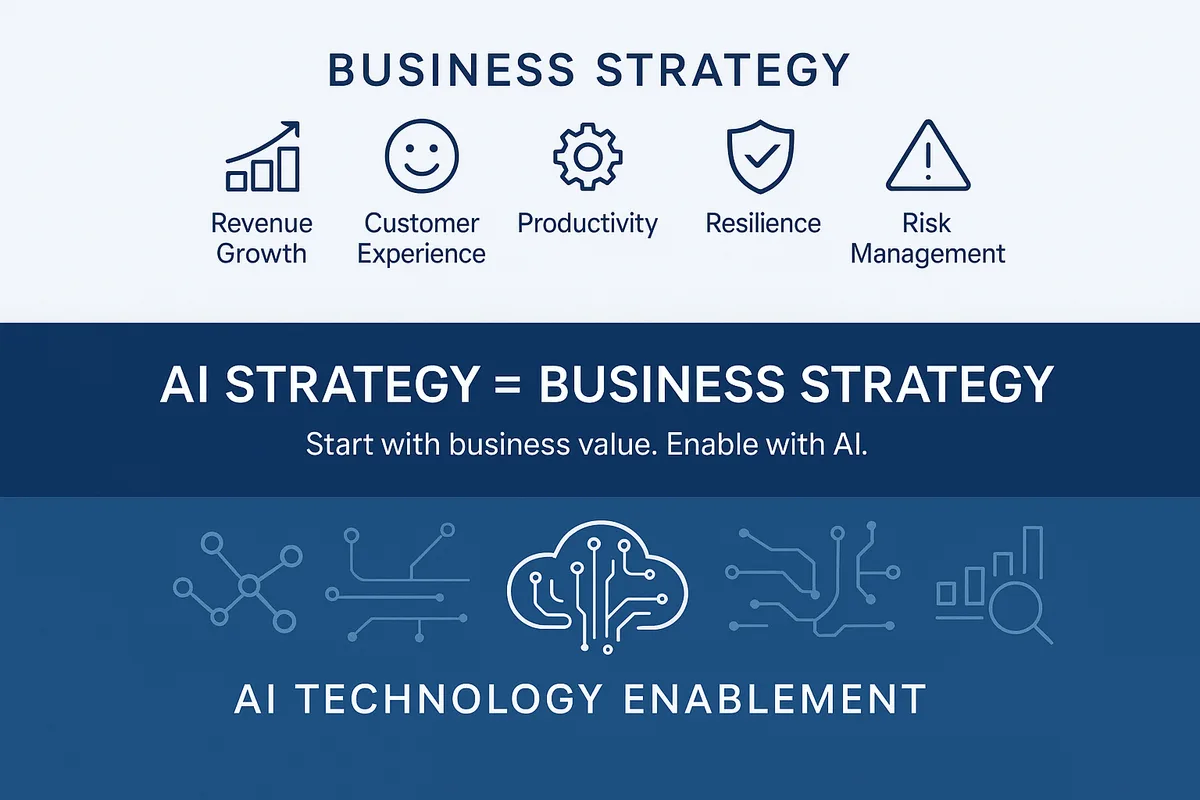
Three-band infographic pairing five business strategy pillars — revenue growth, customer experience, productivity, resilience and risk management — with AI technology enablement icons under the headline AI Strategy = Business Strategy.
Strategy 6 min read

AI Strategy Is Business Strategy

AI strategy is a business strategy, not a technology roadmap — anchored to revenue, customer experience, productivity, resilience and risk.

Read note
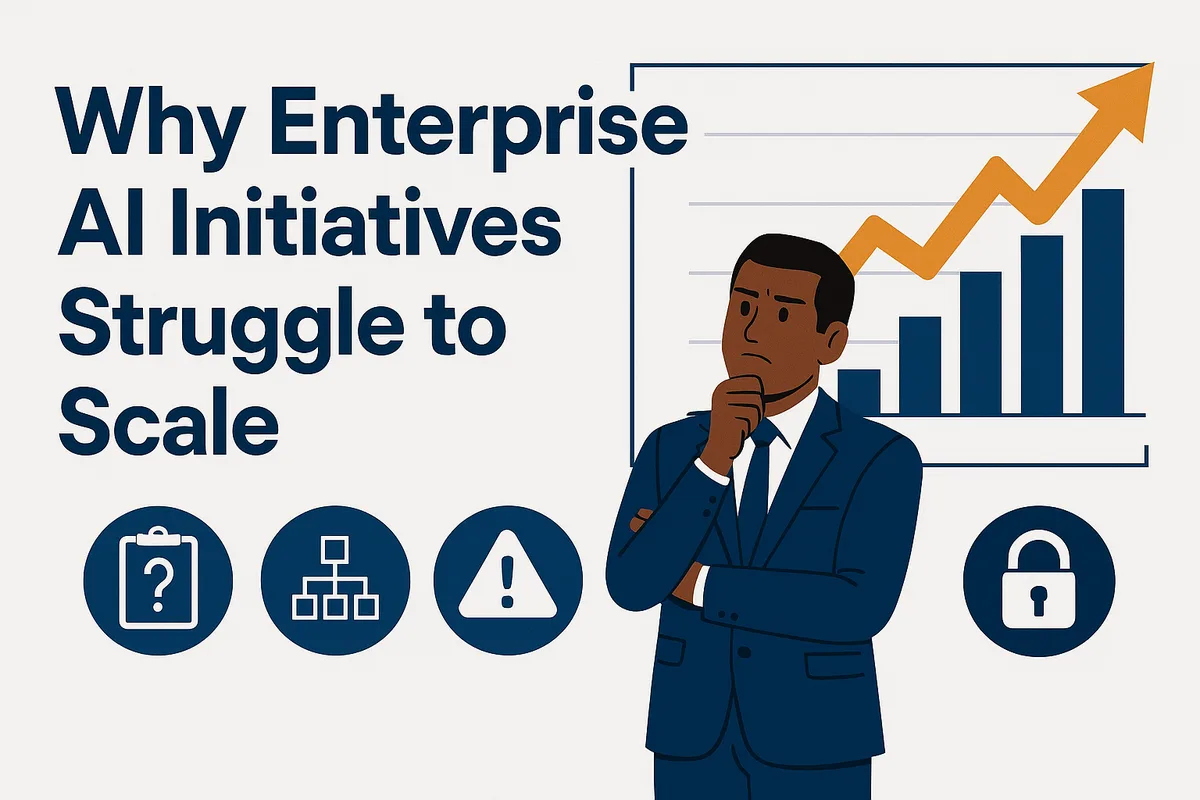
Executive in a blue suit looking thoughtfully at a rising bar-and-arrow chart, alongside icons for questions, hierarchy, warning and security, under the headline Why Enterprise AI Initiatives Struggle to Scale.
Operating Model 7 min read

Why Most Enterprise AI Pilots Fail to Scale

Pilots don't fail because the model fails — they fail because organisations underestimate what operationalising AI really takes.

Read note
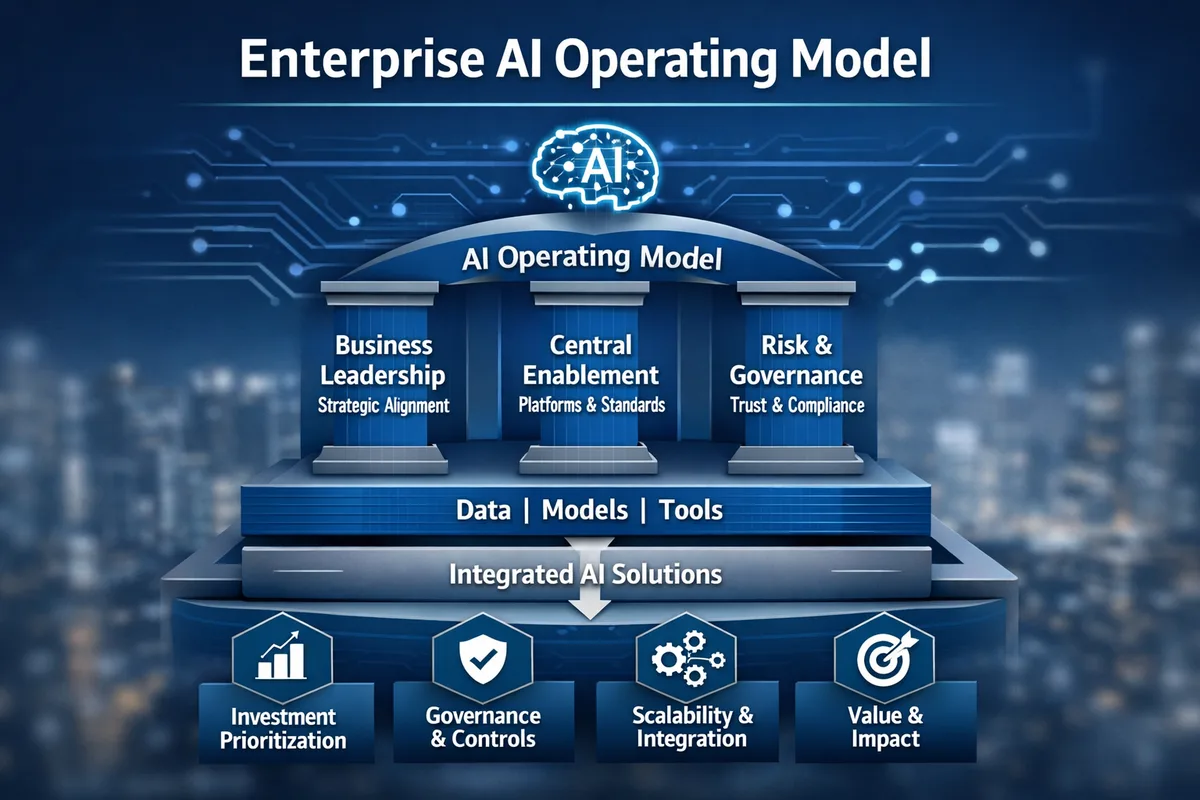
Three-pillar architectural diagram showing Business Leadership, Central Enablement and Risk & Governance columns over a Data-Models-Tools foundation, with four downstream outcome tiles for investment prioritisation, governance, scalability and value.
Operating Model 8 min read

Enterprise AI Requires an Operating Model — Not Just Use Cases

Use cases without an operating model produce noise. Operating models with use cases produce advantage.

Read note
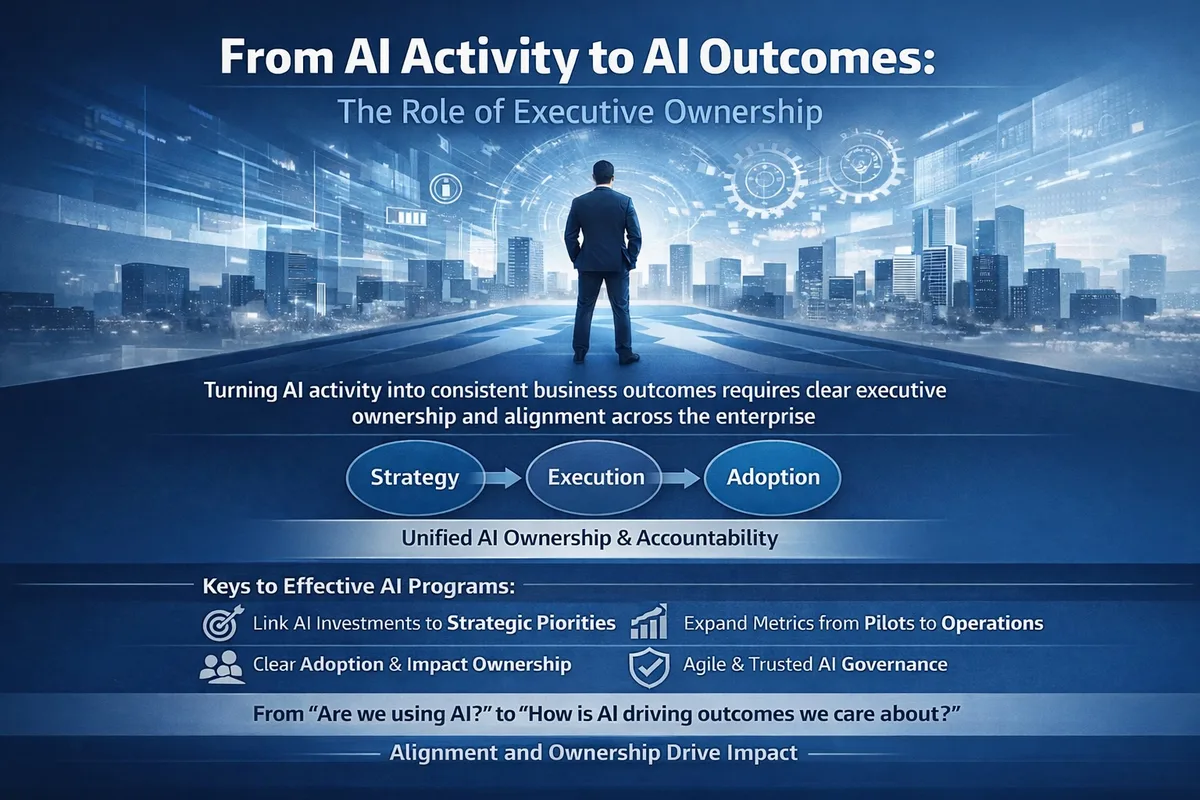
Executive standing on a strategic pathway looking out over a futuristic cityscape, with a Strategy to Execution to Adoption flow arrow and four keys-to-effective-AI-programs panels beneath.
Governance 6 min read

From AI Activity to AI Outcomes: The Role of Executive Ownership

Value at enterprise scale depends less on individual models and more on how ownership is defined across strategy, execution and adoption.

Read note
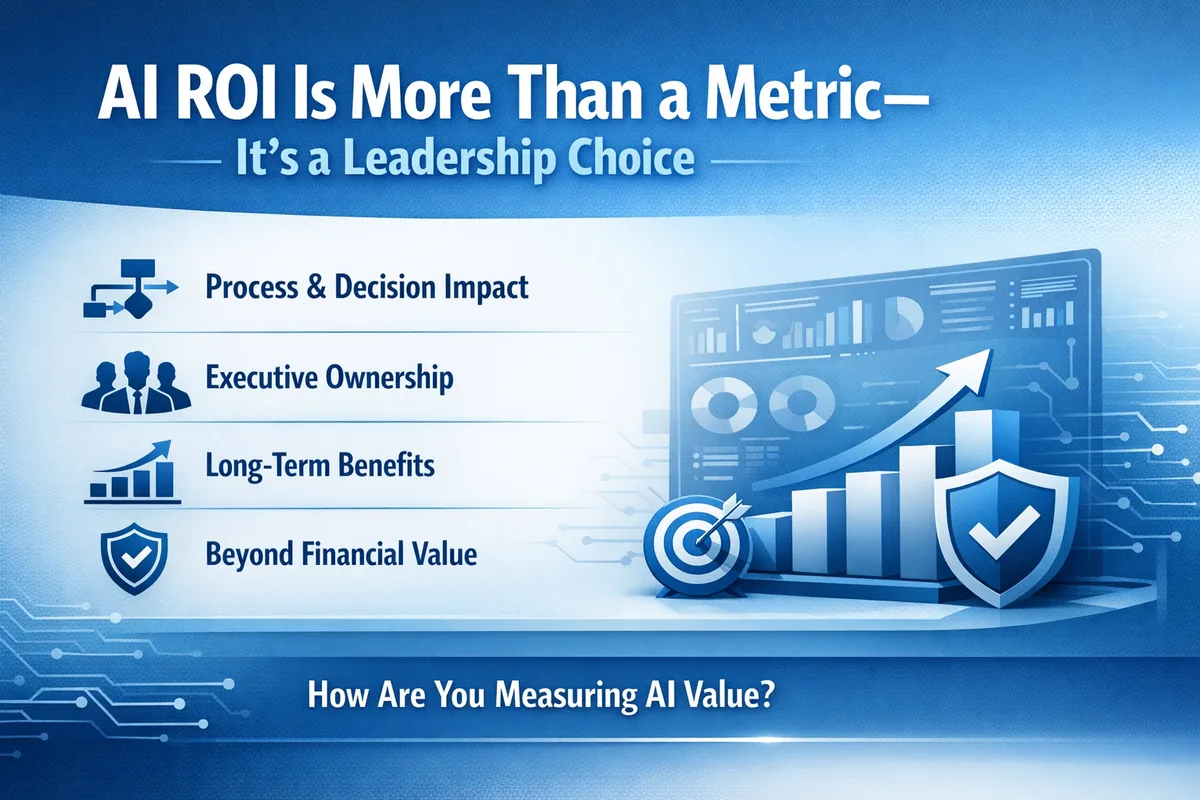
Four labelled value rows — Process & Decision Impact, Executive Ownership, Long-Term Benefits and Beyond Financial Value — alongside a dashboard, target and shield graphic, under the headline AI ROI Is More Than a Metric.
Strategy 5 min read

AI ROI Is More Than a Metric — It's a Leadership Choice

ROI framing shapes what AI is allowed to do inside your enterprise — and much of the value never appears cleanly in a traditional ROI model.

Read note
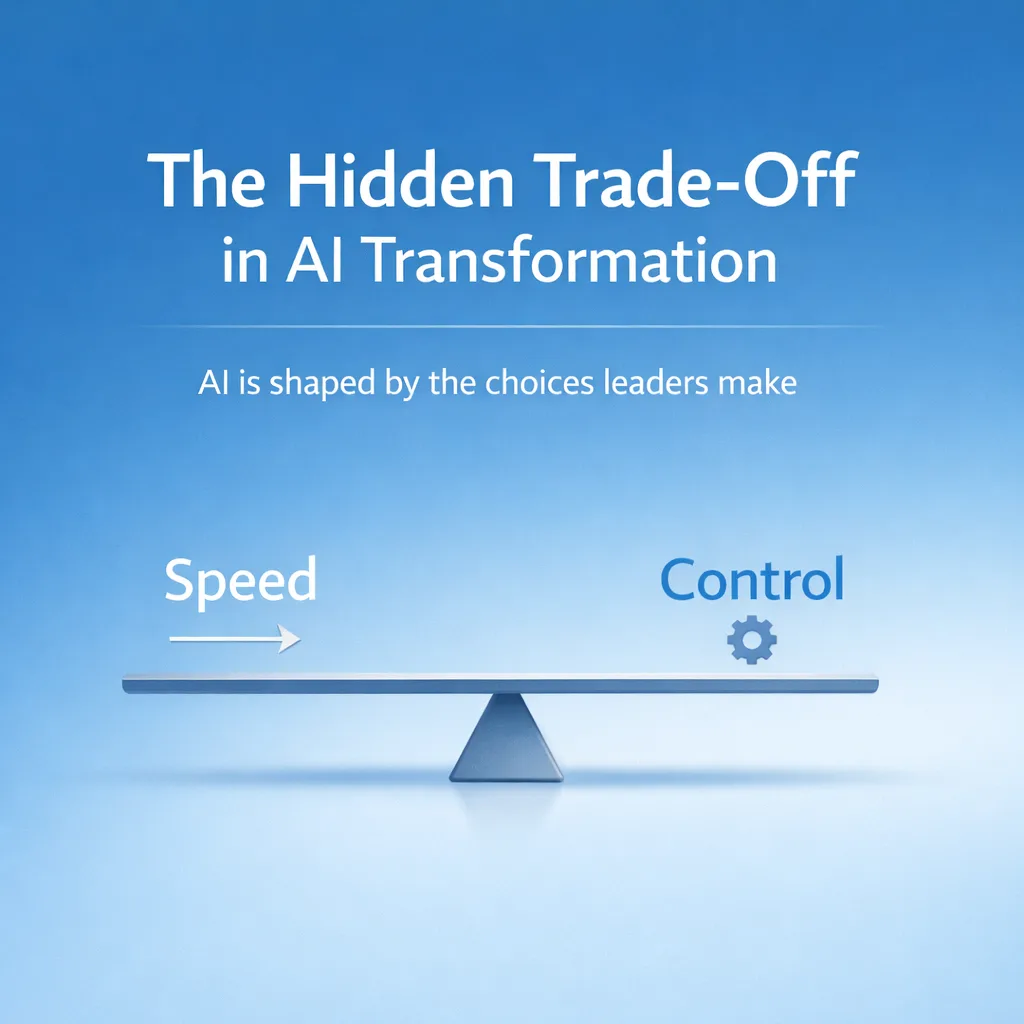
Minimalist balance-beam illustration with Speed on the left and Control on the right, under the tagline AI is shaped by the choices leaders make.
Operating Model 6 min read

The Hidden Trade-Off in AI Transformation

AI transformation is less about perfection and more about alignment — deliberate trade-offs between speed and control.

Read note
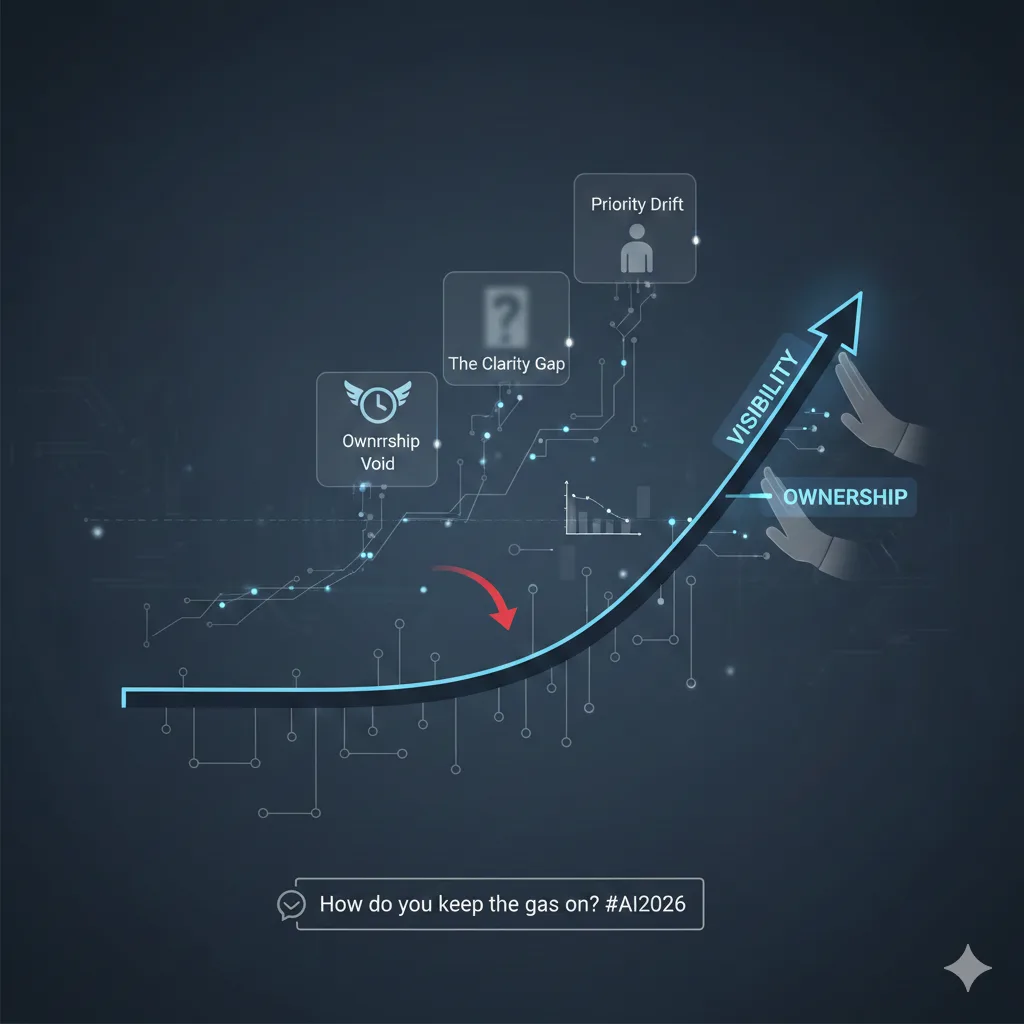
Dark navy artwork of a rising curve with three floating warning labels — Ownership Void, The Clarity Gap and Priority Drift — with a Visibility-and-Ownership arrow rising alongside.
Governance 6 min read

The Dangerous Silence of AI Momentum

Every AI journey hits a plateau — not because the technology stops working, but because organisational attention shifts.

Read note
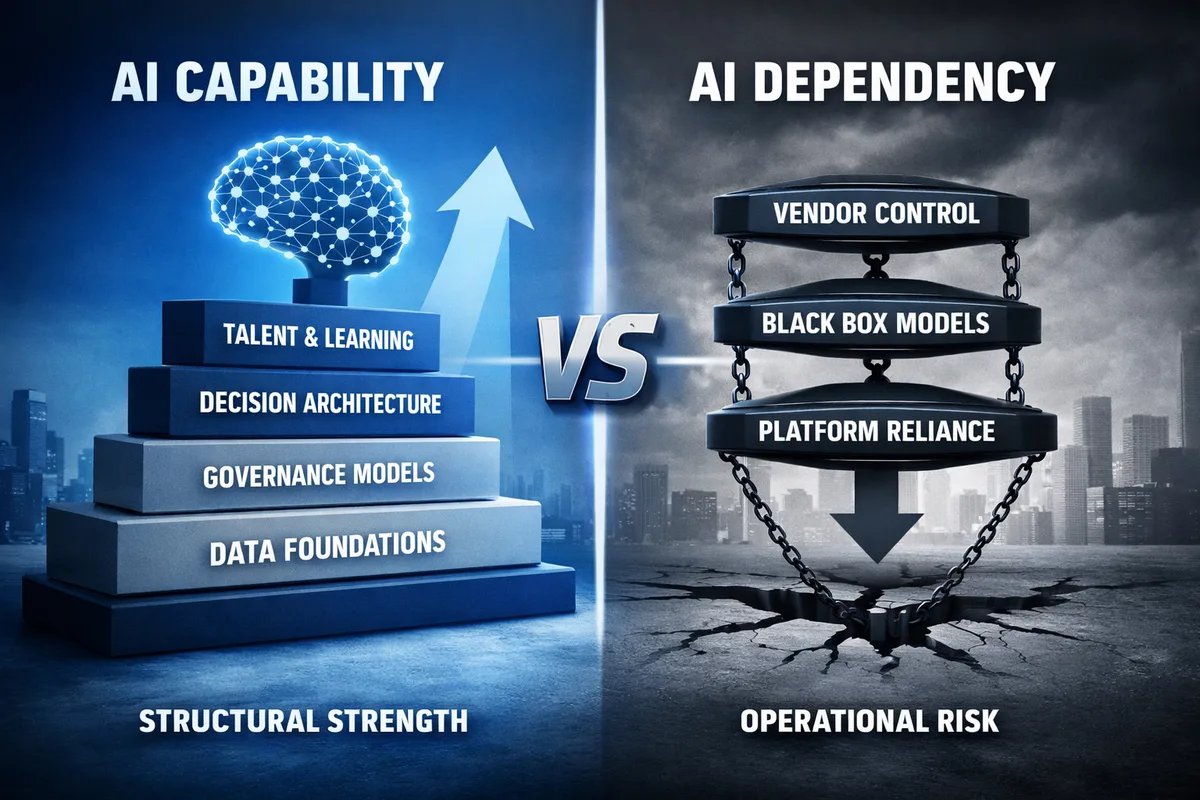
Split diagram contrasting AI Capability — a stacked staircase of data foundations, governance, decision architecture and talent, labelled Structural Strength — against AI Dependency, three chained boxes for platform reliance, black-box models and vendor control breaking into cracked ground labelled Operational Risk.
Capability 7 min read

AI Capability vs. AI Dependency

Long-term advantage comes from platforms, talent, governance and learning loops — not vendor reliance.

Read note
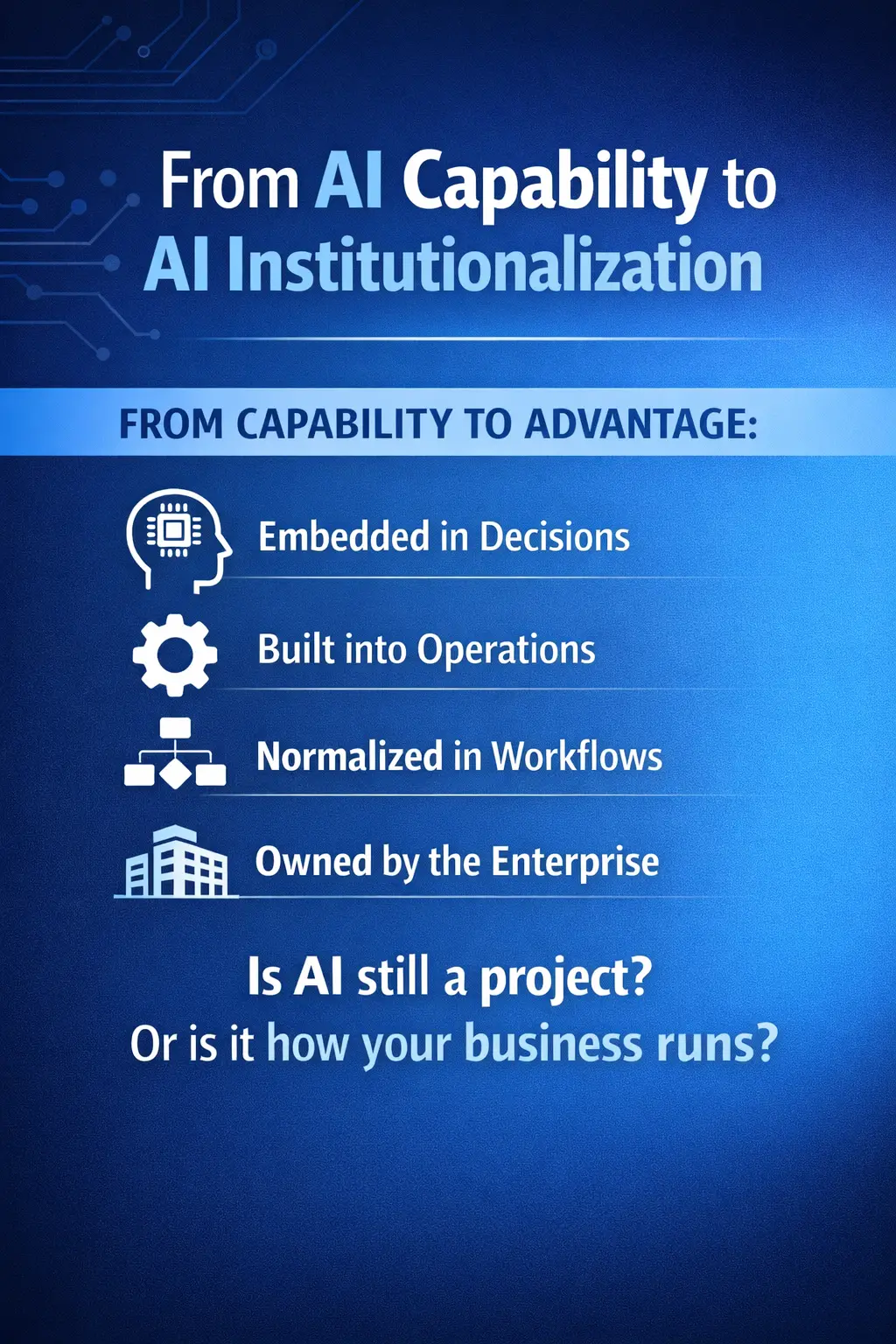
Portrait-orientation infographic with four ascending rows — Embedded in Decisions, Built into Operations, Normalized in Workflows, Owned by the Enterprise — closing with the question Is AI still a project? Or is it how your business runs?
Institutionalisation 8 min read

From AI Capability to AI Institutionalisation

Capability is important. Institutionalising it is the point — when AI stops being a project and becomes how the business runs.

Read note
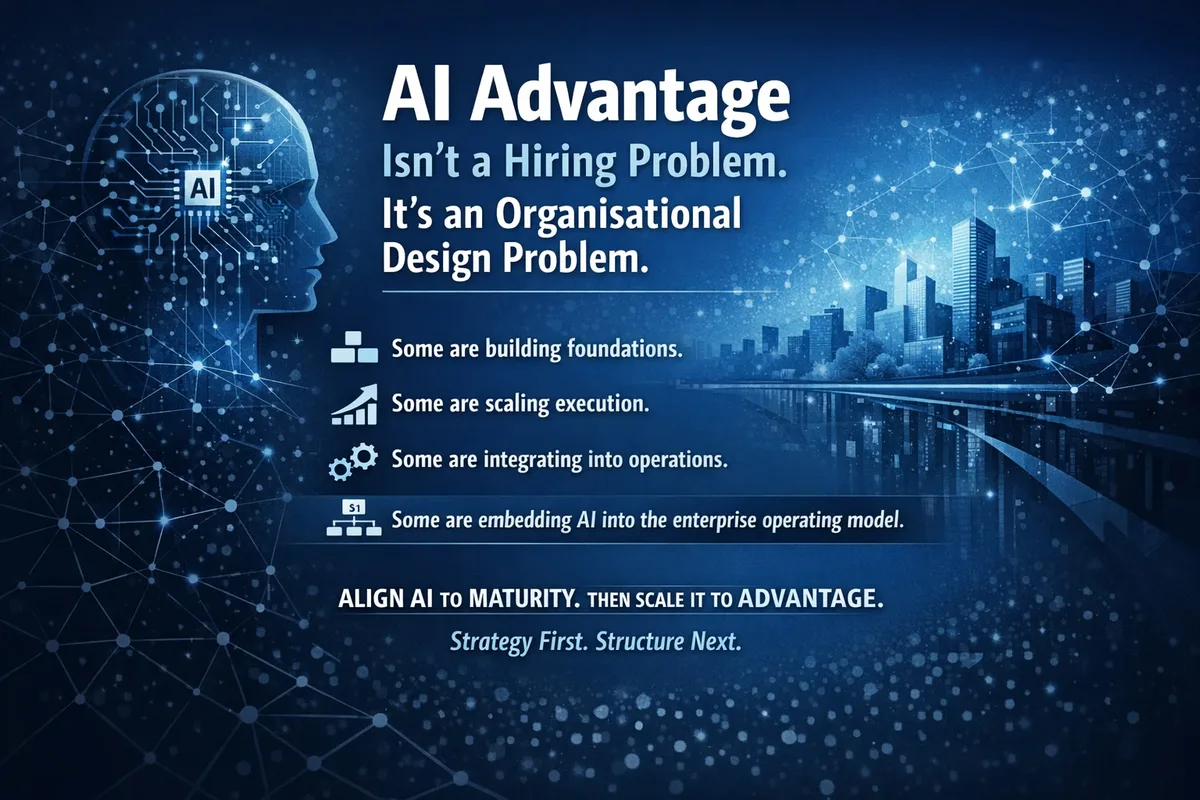
Silhouetted head with an AI chip on the left and a futuristic cityscape on the right, with four maturity rows and the tagline Align AI to maturity. Then scale it to advantage. Strategy first. Structure next.
Capability 8 min read

AI Advantage Isn't a Hiring Problem — It's an Organisational Design Problem

AI team design is not a headcount decision. It is a maturity alignment decision.

Read note
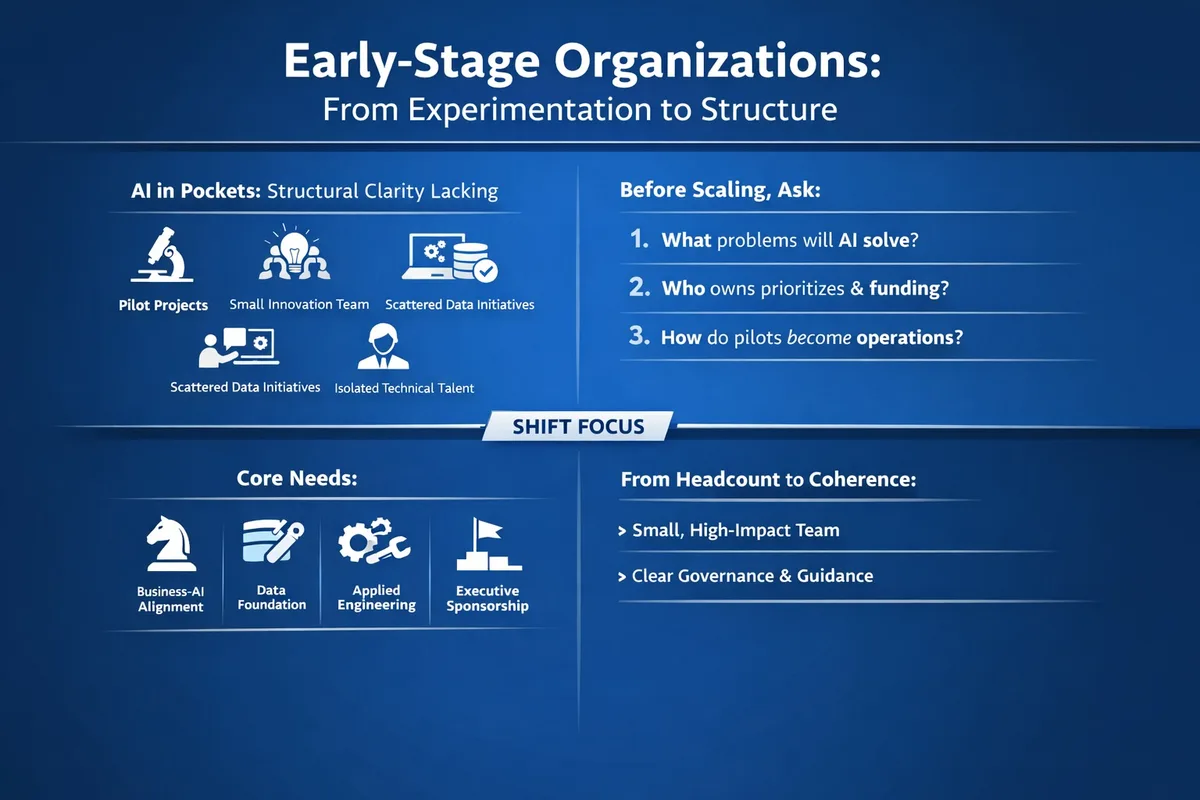
Blue infographic titled Early-Stage Organisations, showing pilot pockets on the top left, three pre-scaling questions on the top right, and four core needs — Business-AI Alignment, Data Foundation, Applied Engineering, Executive Sponsorship — under a Shift Focus banner.
Operating Model 7 min read

Early-Stage Organisations — From Experimentation to Structure

Most early-stage organisations don't have an AI problem — they have a structural clarity problem. Build clarity. Then capability. Then scale.

Read note
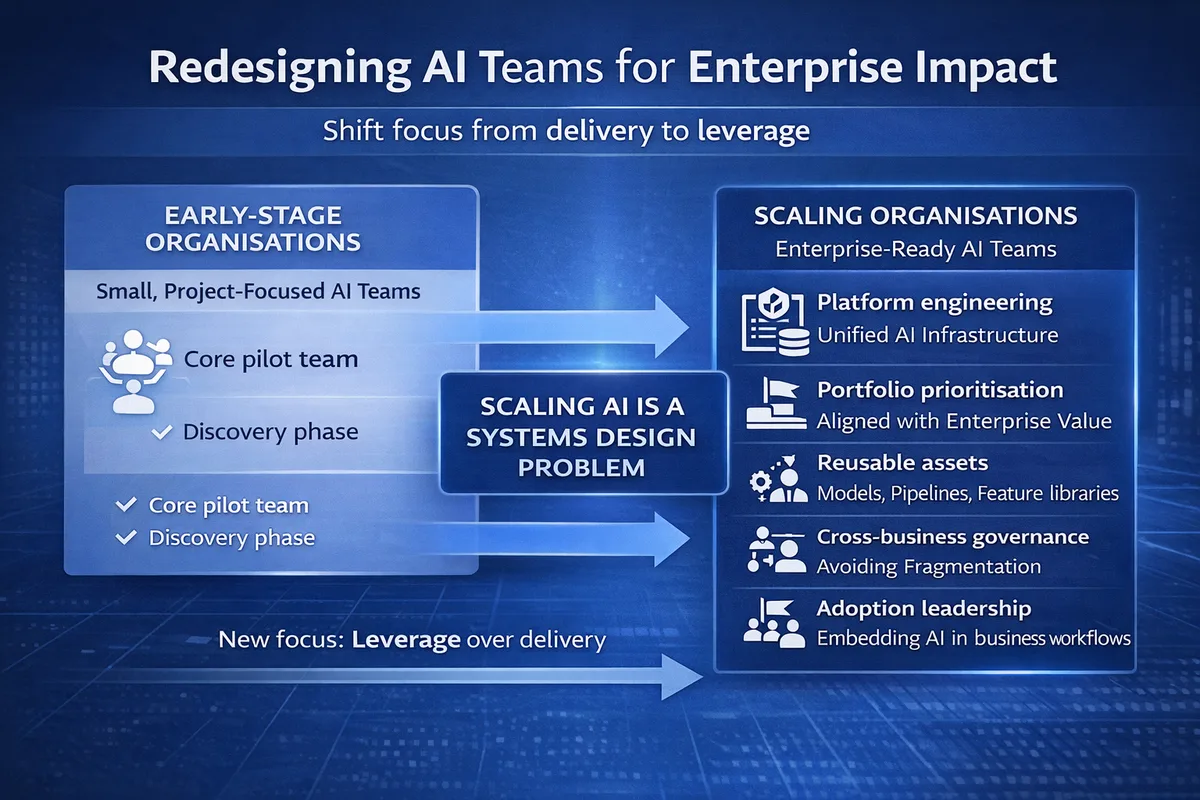
Two-panel diagram — Early-Stage Organisations pilot team on the left, Scaling Organisations enterprise team on the right — connected by a central callout that reads Scaling AI Is A Systems Design Problem, with five enabling capabilities listed for the scaled side.
Operating Model 8 min read

Scaling Organisations — Redesigning AI Teams for Enterprise Impact

Scaling AI is not a hiring problem — it is a systems design problem. The AI function must be redesigned around leverage, not delivery.

Read note
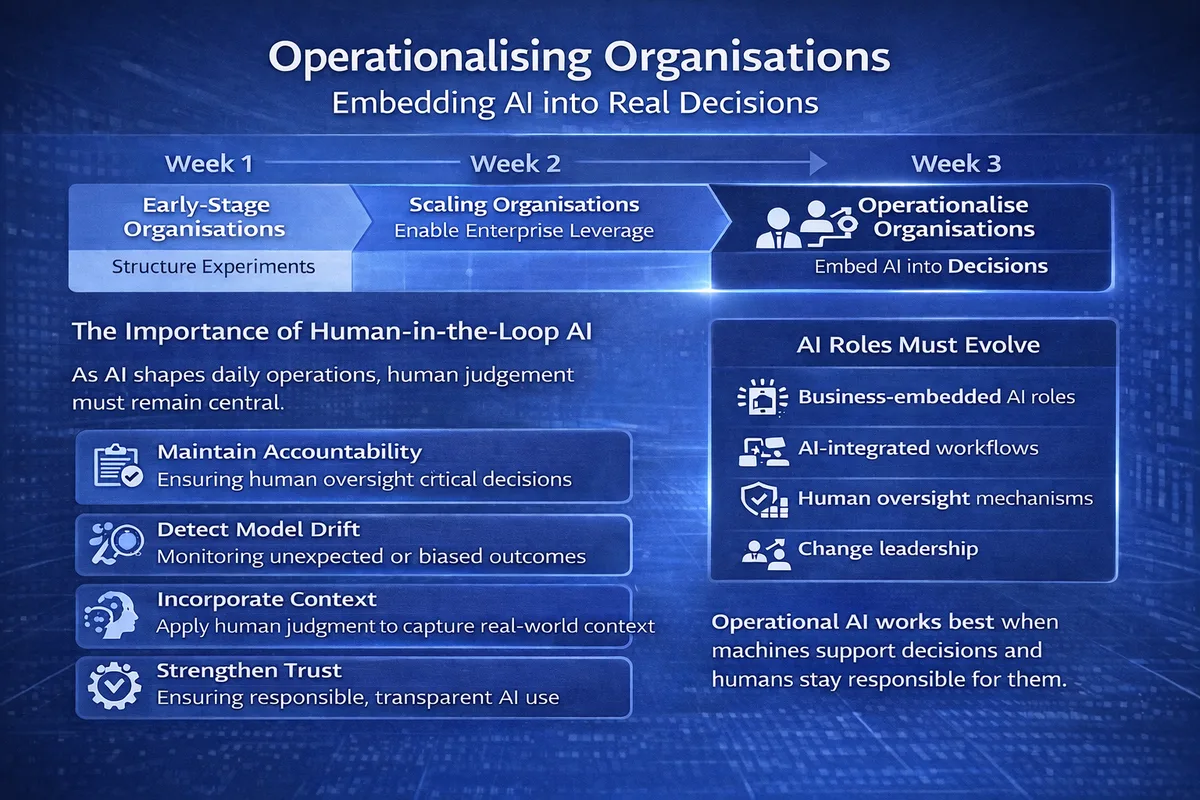
Three-week evolution banner — Early-Stage to Scaling to Operationalise Organisations — with a Human-in-the-Loop AI panel listing accountability, model drift, context and trust, and a second panel listing how AI roles must evolve.
Operating Model 7 min read

Operationalising Organisations — Embedding AI into Real Decisions

Building models is one challenge. Embedding them into daily operations — with human oversight — is another entirely.

Read note
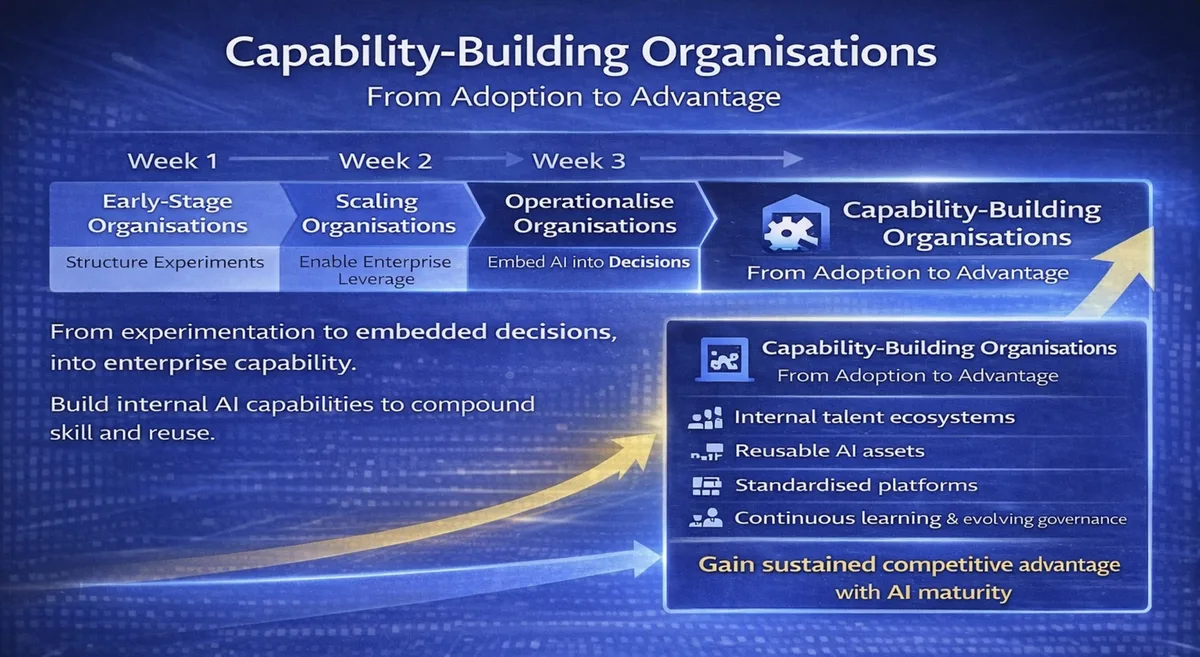
Four-week timeline continuing into Capability-Building Organisations, listing internal talent ecosystems, reusable assets, standardised platforms and continuous learning, closing with Gain sustained competitive advantage with AI maturity.
Capability 8 min read

Capability-Building Organisations — From Adoption to Advantage

Adoption without capability leads to dependency, not advantage. Capability compounds — in speed, cost, resilience and control.

Read note
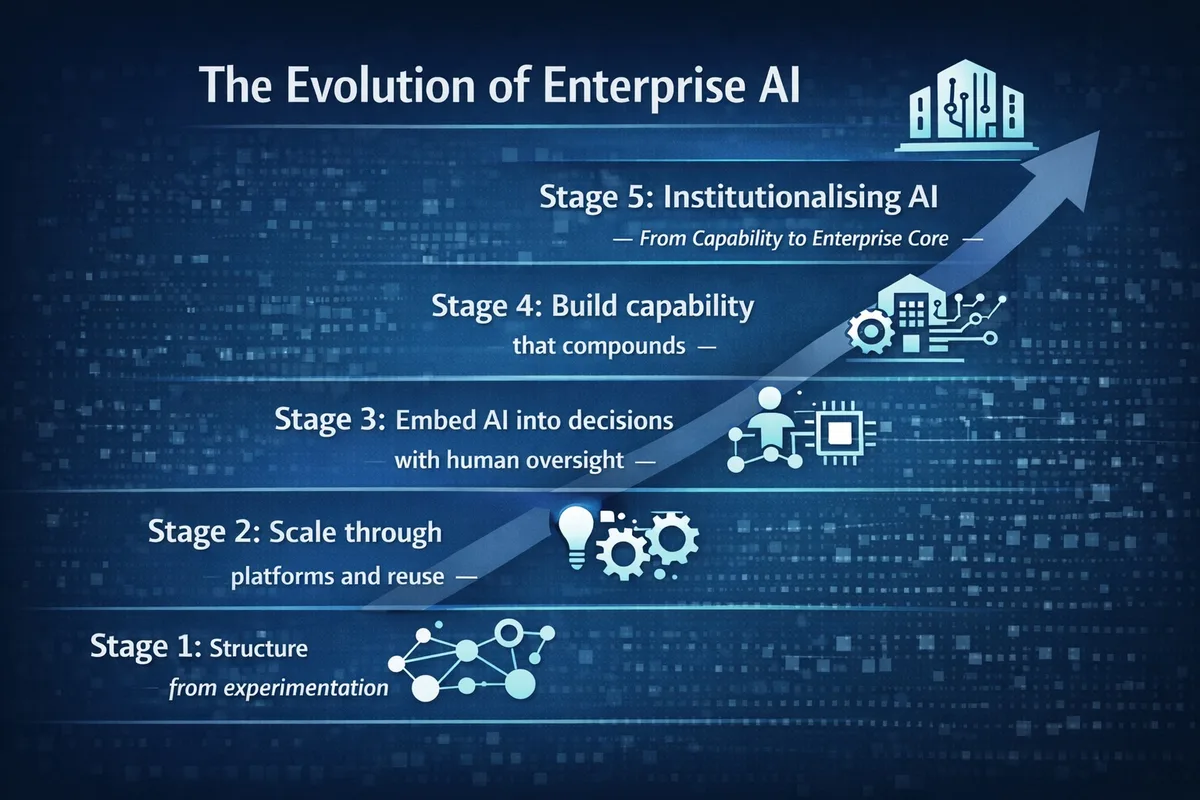
Five-stage staircase titled The Evolution of Enterprise AI, showing Structure, Scale, Embed AI into decisions, Build capability that compounds, and Institutionalise AI — from capability to enterprise core.
Institutionalisation 9 min read

Institutionalising AI — From Capability to Enterprise Core

At the final stage, AI is no longer something the organisation is building — it becomes part of how the organisation operates at its core.

Read note
Subscribe

Enterprise AI Advantage Notes — monthly briefs for boards and operators.